

VW Golf R Water Pump Problems by Generation: MK6, MK7, MK8 Guide


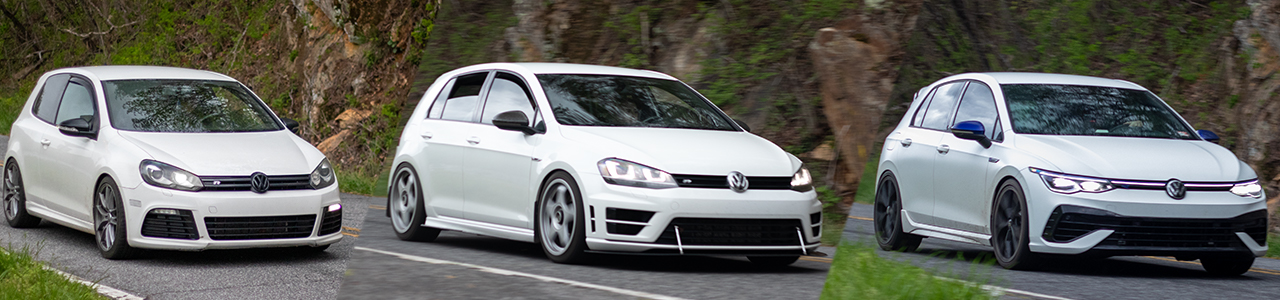
VW Golf R Water Pump Issues: What You Need to Know
The Volkswagen Golf R is the performance pinnacle of the Golf lineup, combining all-wheel-drive traction with a turbocharged 2.0T engine for serious speed and everyday usability. From the MK6 to the latest MK8 generation, the Golf R delivers impressive power, refined handling, and year-round capability. But like any high-performance turbocharged engine, maintaining proper cooling is critical, and that’s where the water pump comes in.
In this article, we’ll explore common VW Golf R water pump problems, how to spot early signs of failure, and what you can do to prevent costly engine damage. Whether you're daily driving or tracking your Golf R, water pump health is essential for keeping your engine running strong.
How to Prevent Golf R Water Pump Issues
- Inspect coolant level and check for leaks regularly
- Watch for repeated low coolant warnings or temperature fluctuations
- Replace the pump proactively during timing belt service (MK6 Golf R)
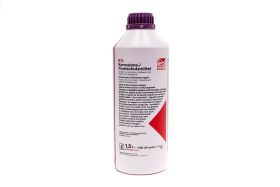
- Always use OEM VW coolant (or equivalent) to avoid issues from mixing incompatible fluids.
MK8 Golf R Water Pump Problems – 2022–2026
With the MK8, VW introduced the EA888 Gen 4 EVO 2.0T engine. These engines (like the Gen 3) use a belt-driven water pump, which is driven off the balance shaft in the engine. It features a combined water pump and thermostat housing assembly, bolted to the engine block. These engines use the same updated parts now used on the Gen 3 engine.
The earlier versions of these parts were more prone to failure, but it is still possible for leaks to develop. Generally, leaks come from the gasket between the engine block and the thermostat housing. When replacing, you should replace the complete water pump and thermostat housing assembly to help prevent future leaks.
Typical signs of failure:
- Coolant puddle under the front center of the vehicle
- Low coolant warning light comes on repeatedly
- Occasional fault codes related to coolant temperature regulation
- Overheating when coolant loss is ignored
MK8 Golf R Water Pump Parts – EA888 Gen 4 EVO
Purchase – Genuine VW MK8 Golf R Water Pump Kit
Purchase – INA MK8 Golf R Water Pump Kit
MK7 Golf R Water Pump Problems – 2015–2021 (More Details)
With the MK7, VW introduced the EA888 Gen 3 2.0T engine. These engines use a belt-driven water pump, driven off the balance shaft in the engine. It features a combined water pump and thermostat housing assembly, bolted to the engine block. This plastic housing is known for developing coolant leaks over time, especially around the gasket or where the housing meets the engine block. Faults may also appear if the integrated electromechanical thermostat fails to open or close properly.
Typical signs of failure:
- Coolant puddle under the front center of the vehicle
- Low coolant warning light comes on repeatedly
- Occasional fault codes related to coolant temperature regulation
- Overheating when coolant loss is ignored
MK7 Golf R Water Pump Parts – EA888 Gen 3
Purchase – Genuine VW MK7 Golf R Water Pump Kit
Purchase – INA MK7 Golf R Water Pump Kit
MK6 Golf R Water Pump Problems – 2012–2013
The MK6 Golf R came equipped with the EA113 2.0T engine (often referred to as an FSI). This engine uses a timing belt-driven water pump, mounted on the front of the engine (passenger side of the car). These pumps were known for plastic impellers that could break apart over time, reducing coolant flow and causing overheating.
Because the water pump on this car is driven by the timing belt, they should be replaced together. Water pump replacement is a significant amount of work and requires removal of the timing belt. For this reason, we highly recommend replacing the full timing belt kit with the water pump when replacing the water pump, to avoid significant future labor at the 80k–100k mile timing belt replacement interval.
Common MK6 Golf R water pump symptoms:
- Coolant leaks (from failed seals or pump housing)
- Low coolant warning on the dash
- Overheating due to impeller failure
MK6 Golf R Water Pump Diagnosis
Water pump failures on the MK6 Golf R are typically caused by a leak, a broken plastic impeller, or a bad bearing.
A leak will be easy to find, as you will see coolant coming down the passenger side of the engine. A broken plastic impeller means coolant will not circulate through the cooling system, which will cause the engine to overheat. An easy way to confirm this is to run your vehicle and determine if coolant is circulating back into the top of your coolant reservoir. If the system is up to temperature, you should see coolant flowing back into the reservoir.
Lastly, a failing bearing may create noise from the pump. You can remove the timing covers and watch the engine run to see if the water pump has an obvious wobble while it’s running. Another option is to use a stethoscope on the non-rotating part of the water pump to determine if you hear excessive bearing noise.
MK6 Golf R Water Pump Parts
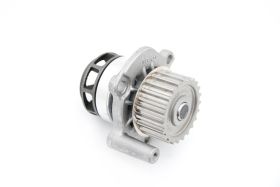
Water Pump with Metal Impeller
Timing Belt Kit for MK6 Golf R
Final Thoughts
Whether you're driving a MK6, MK7, or MK8 Golf R, staying on top of water pump health is key to keeping your high-performance hatchback running at its best. These engines thrive on consistent cooling, and even a small leak can turn into a big problem if ignored.
If you're unsure which water pump your Golf R needs, send us your VIN and we’ll confirm the correct part for your engine code. DIYers with the right tools can handle the job, but professional installation is always recommended if you’re not comfortable working with the cooling system.
Don’t wait for a warning light to tell you something’s wrong—stay ahead of the issue and keep your Golf R ready for anything.
About the Author

Related Products
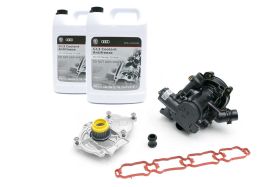
Genuine Thermostat and Water Pump with Install Kit | MQB 1.8T/2.0T Gen3
From $1.35 Regular Price $1.54
To $833.97 Regular Price $947.73
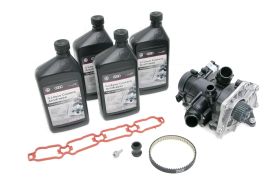
INA Thermostat and Water Pump with Install Kit | MQB 1.8T/2.0T Gen 3
From $8.53 Regular Price $9.70
To $421.32 Regular Price $435.84



Audi 2.0t TSI Engine Common Problems
2018-03-15


Warehouse Associate - Cornelius NC
2026-05-19


Comments